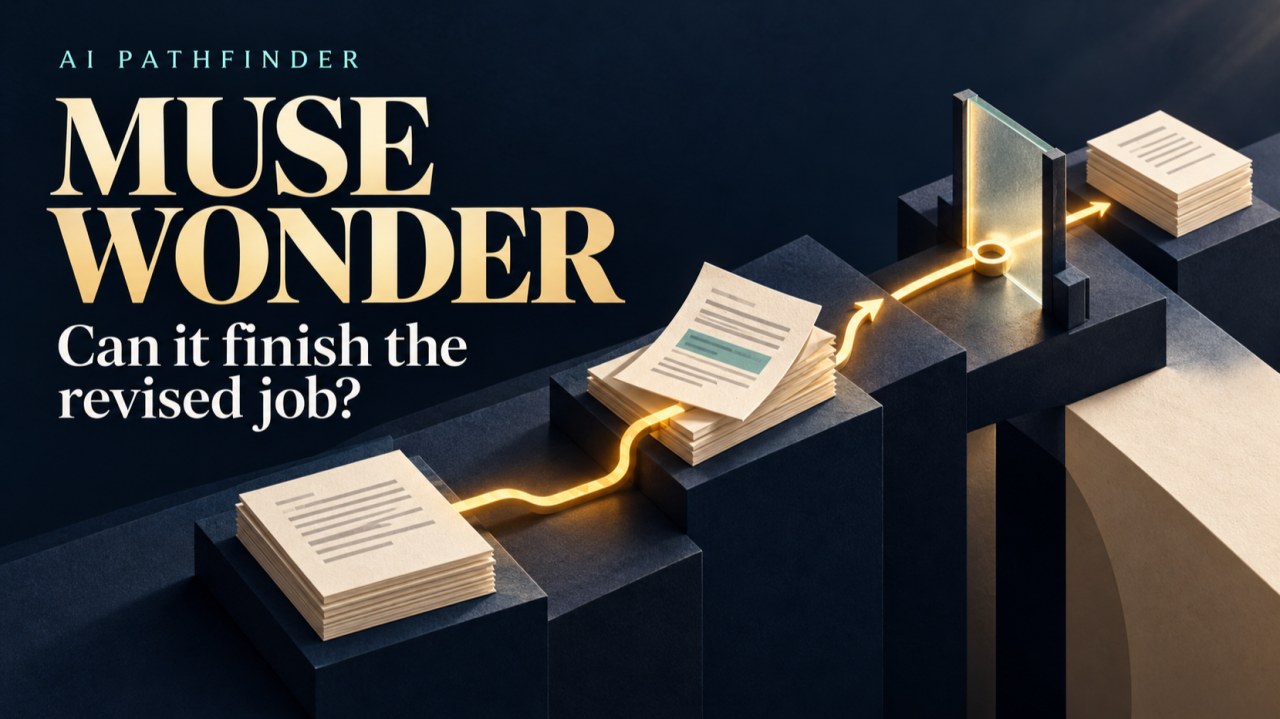
A useful AI agent should remember the constraint you gave it yesterday without making you repeat the whole assignment today.
That sounds modest until the assignment involves a customer deadline, conflicting documents, and permission to send something on your behalf. Remembering the wrong detail can be worse than forgetting. Persisting with an outdated instruction can create more work than stopping to ask.
Meta’s new Muse Wonder models are aimed at this problem. For leaders evaluating AI, the launch offers a reason to test how well an agent carries work forward, not just how impressive its first answer looks.
Why this matters
Meta introduced Muse Wonder and Muse Wonder Full on October 12. Its announcement emphasizes “Active Memory,” which retrieves relevant context across conversations, and “Active Focus,” which sustains work through obstacles and changing information.
At launch, Meta says Muse Wonder is available through the Meta Model API and Muse Code. Muse Wonder Full is available to Muse Code subscribers. The company says Wonder will reach the Muse personal-agent experience soon, starting with subscribers. Those are different access paths, not a single rollout to every user.
My recommendation: evaluate Wonder within the agent application or harness you intend to use, on a recurring assignment with a changed requirement halfway through. Measure whether it updates its work correctly, asks at the right moment, and stops before an action you haven’t approved.
What Meta is actually launching
The Yahoo/Quartz report frames Wonder as Meta’s answer to ChatGPT and Claude. Meta’s own announcement names two models and describes strengths in coding, domain knowledge and personal and professional agent tasks.
Meta’s Muse Wonder model card lists text, image, video and audio inputs, text output, and a one-million-token inference context. A large context window is useful capacity. It does not, by itself, prove that the system remembers the right information or applies it correctly.
Meta also reports frontier benchmark performance. These are publisher-reported evaluations, not evidence that Wonder will outperform your current model on your workload. The card says its Wonder results use maximum reasoning effort, and its comparisons draw on both controlled internal testing and externally reported results. Configuration and the surrounding agent software matter when reading those comparisons.
This is a source-based analysis, not a hands-on evaluation of Wonder.
Keep the model separate from the application. Muse is the personal agent product, with a browser, connected services and a persistent computing environment. Wonder is an AI model family. Accessing the model through an API does not automatically give your application every protection or feature of the Muse product.
Active Memory needs a correction test
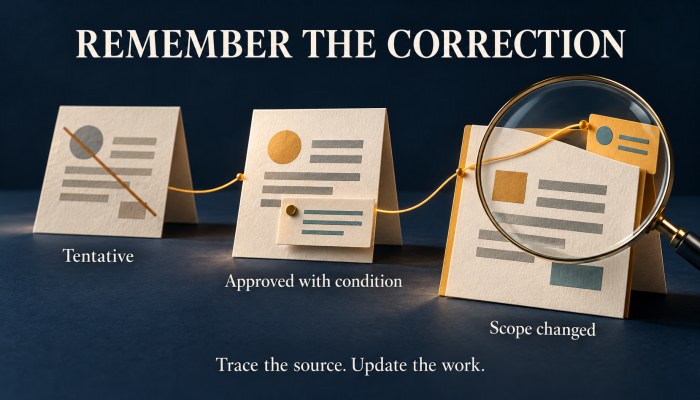
Meta describes Active Memory as carrying important context across conversations and retrieving the details relevant to the current task.
For business work, remembering preferences is only a start. An agent also needs to distinguish an approved decision from a tentative suggestion and a current instruction from a superseded one.
Consider a hypothetical customer proposal. On Monday, a team discusses two possible delivery dates. On Tuesday, operations approves one date with a condition. On Wednesday, the customer changes the scope.
An agent that remembers everything indiscriminately could produce a confident proposal with the wrong date. A useful agent would identify the current decision, preserve the condition, and flag that the scope change may invalidate the commitment.
That is the test I would run against Active Memory:
- Can it point to the source of the remembered fact?
- Does a correction replace the earlier assumption in subsequent work?
- Can it keep one customer’s context from influencing another customer’s document?
- When two sources disagree, does it ask rather than silently choose?
These are proposed acceptance tests, not results from a hands-on Wonder evaluation.
Active Focus needs a stopping rule
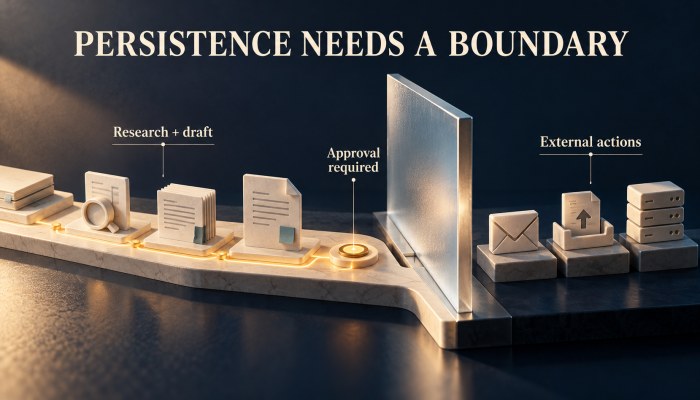
Meta describes Active Focus as continuing toward a challenging goal, trying alternatives, handling blockers and adapting to new information. It says the model asks for clarification when needed and checks in before important actions.
That could reduce the supervision required for longer assignments. It also makes the stopping rule more important.
Suppose an agent is preparing a supplier comparison. It can research options, reconcile requirements and draft a recommendation. If a vendor page asks it to upload internal specifications to receive a quote, the agent should stop at that boundary. “Finish the comparison” should not become permission to disclose confidential information.
Evaluate persistence and restraint together. A model that keeps going is useful when it tries another approved source. It is a liability when it invents missing evidence or expands its own authority to finish.
For software work, I would apply the same distinction: editing and testing in an isolated branch is different from deploying to production. Completing the task includes respecting where the task ends.
The security architecture matters as much as the model
Meta’s September description of Muse explains a deliberate separation between the agent runtime and the services that control credentials and permissions. It describes a host-side component called Sentinel as the authority for connector actions and network egress. The agent proposes an action; Sentinel decides whether to allow it, deny it or ask the user.
That is an architecture worth studying. A prompt telling an agent to be careful is weaker than a permission boundary the agent cannot change.
But the distinction cuts both ways. Those protections are described for the Muse product. A company building its own agent with the Wonder API must establish its own tool permissions, credential handling, logging and approval controls.
Privacy also deserves a separate review. Meta’s September 8 security post describes training on inference trajectories sanitized to remove key personally identifiable information by default, with an opt-out in Muse settings. As of that post, Confidential VM was in testing with a small trusted group, with delivery planned later in 2026. It was not a generally available launch protection. The existing architecture, according to that post, does not prevent Meta from accessing data when necessary to operate, support or secure the service.
Those are product-policy statements from that source, not a conclusion about the terms of every Meta API offering. Check the current terms and settings for the exact service you plan to use before connecting business data. Neither a dedicated VM nor a training opt-out answers every retention and access question.
Your AI Pathfinder Action Plan for Meta’s AI Muse Wonder
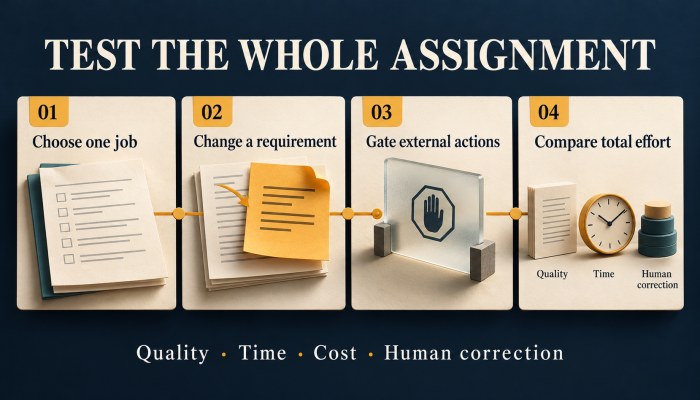
1. Choose one assignment with an inspectable result
Use a supplier comparison, a proposal draft from approved inputs, or a code change in a test repository. Define what a reviewer needs to accept the finished work. Avoid a vague instruction to “help our team be more productive.”
2. Introduce a controlled change
Change a deadline, correct a source fact or withdraw a requirement midway through. Check whether the agent updates all affected outputs and identifies unresolved conflicts. This tests the launch’s memory and focus claims more directly than another clean one-shot prompt.
3. Keep external actions gated
Begin with read access and draft outputs. Require explicit approval before sending messages, uploading private files, purchasing or changing a system of record. Test the boundary with harmless scenarios before trusting it with real consequences.
4. Compare the total work required
Record completion quality, elapsed time, tool usage, cost and human correction time. Count abandoned runs and retries. Compare with your existing approach using the same inputs and review standard. A lower model price or higher benchmark score is not the same as a cheaper accepted result.
Frequently Asked Questions
Does Muse Wonder already power every Muse account?
The October 12 announcement says the Muse rollout is coming soon and will begin with subscribers. It separately lists launch access through the API and Muse Code, with Wonder Full available to Muse Code subscribers. Verify your actual product access before planning a deployment.
Does performance on legal, finance or health tasks make it suitable for autonomous professional decisions?
No. Domain benchmarks can help identify capabilities to evaluate. They do not establish professional accountability, suitability for your circumstances or permission to act. Use qualified review and the controls appropriate to the work.
The Bottom Line
Muse Wonder puts useful attention on two problems that frustrate business users: repeating context and supervising unfinished work.
The next evaluation should test whether an agent can remember a correction, complete the revised assignment and respect its permissions. Give it a job you can inspect, change something important, and see what it does next.
Related reading: Google’s Gemini agent and the recurring-assignment test.
About Jason Fleagle
Jason Fleagle is the Head of AI for Netsync and writes AI Pathfinder to help leaders turn AI developments into practical decisions about strategy, governance and implementation. Connect with Jason on LinkedIn or learn more about Netsync.
Sources
[1] Meta: Muse Wonder launch announcement, October 12, 2026
[2] Yahoo/Quartz: Meta launches Muse Wonder, October 12, 2026
[3] Meta: Muse Wonder model card
[4] Meta: How We Built Safety Into Muse, September launch architecture
Originally published on LinkedIn.