
AI Governance Workshop

AI Governance Workshop: Create AI rules your teams can actually follow.

A practical governance workshop for executives who need responsible AI policies, human review, risk boundaries, and clear decision rights without freezing innovation.

No AI theater. No tool-first chaos. Just executive clarity, governed adoption, agentic workflow design, and a practical path from interest to operating value.

AI Strategy  •  Readiness  •  Governance  •  Agents & Workflows  •  Executive Speaking
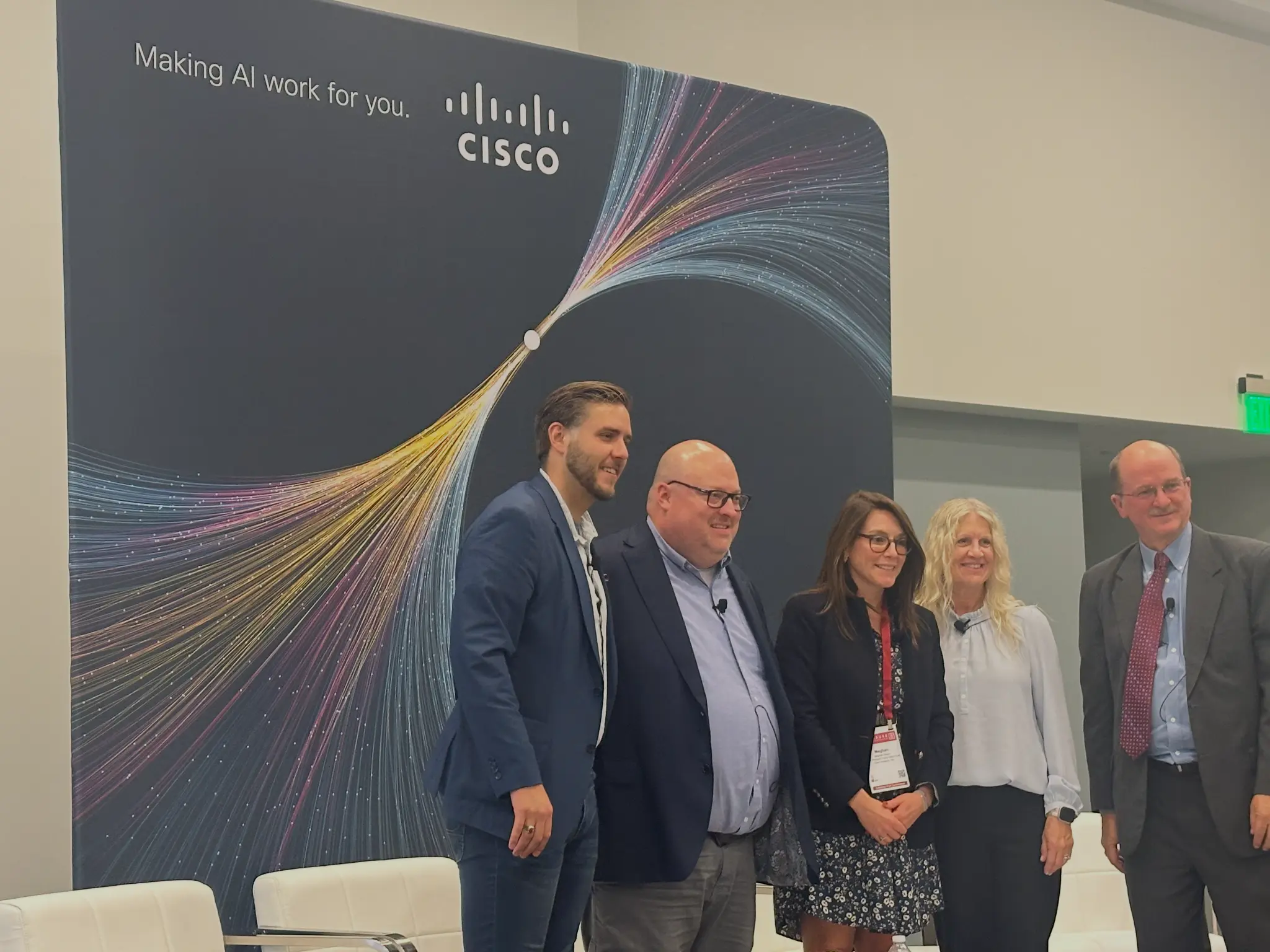
Jason Fleagle at Cisco AI panel

Executive

Boardroom-ready AI strategy and decision support

Operator

Use cases, governance, owners, scorecards, and roadmaps

Built for leaders who need useful AI, not more noise

Practical AI strategy for leaders who need clarity, governance, and measurable business outcomes.

Strategy clarity

Prioritized use cases tied to business decisions.

Governed adoption

Risk, policy, human review, and operating guardrails.

Agentic workflows

AI agents designed around real work and accountable owners.

Executive communication

Keynotes, workshops, and board-ready AI narratives.

Executive questions

The right AI conversation starts before the tool decision.

The strongest workshops start with the decisions leaders must make: where AI is allowed, what data it can touch, who reviews outputs, and how exceptions are handled.
  • Where should we actually use AI first?
  • How do we govern AI without slowing innovation?
  • Which workflows are safe enough for agents?
  • What should our 90-day roadmap look like?
  • How do we help teams adopt AI responsibly?
  • How do we explain AI risk and opportunity to executives?
Jason Fleagle leading an AI workshop

The AI Operating Advantage Framework

A practical path from AI pressure to governed operating value.

  • Assess — understand readiness, friction, data, risk, and executive pressure.

  • Prioritize — choose use cases that matter enough to fund and practical enough to ship.

  • Govern — create guardrails, human review, policies, and decision rights.

  • Prototype — design workflows and agents around real work, not demos.

  • Scale — move from pilot enthusiasm to adoption, measurement, and ownership.

Choose the right AI path

One brand system. Multiple executive buying motions.

Define the roadmap, operating model, and executive priorities.

Explore AI Strategy →

Score maturity, friction, governance gaps, and pilot fit.

Explore AI Readiness →

Turn responsible AI into usable policies and review rhythms.

Explore AI Governance →

Design agentic workflows with human oversight and business value.

Explore AI Agents →

Move from roadmap to pilots, enablement, metrics, and adoption.

Explore Implementation →

Make AI clear for executives, teams, boards, and events.

Explore Speaking →

Ready to make AI useful?

Start with a focused executive AI conversation.

If your team needs strategy, readiness, governance, agents, implementation support, or a keynote that creates actual clarity, start here.


AI Governance Workshop: practical answers for serious AI decisions

Designed for executives and operators who need a practical AI decision path: clear business priorities, readiness assessment, governance, workflow design, human review, implementation sequencing, and measurable next steps.


AI Governance Workshop: Direct Answer and FAQ

Direct answer: An AI governance workshop helps leaders create practical rules for AI use: approved tools, data boundaries, review requirements, ownership, risk tiers, and escalation paths. The goal is not to slow adoption; it is to make useful AI adoption safer and easier to scale.

What should AI governance cover?

AI governance should cover approved use cases, data handling, model/tool approval, human review, accountability, security, compliance, and monitoring.

Who needs to be involved?

Business leaders, IT, security, legal/compliance, HR, operations, and representatives from teams already using AI.

What makes governance practical?

Rules must be plain-language, workflow-specific, easy to follow, and connected to real decisions teams make every week.

Related resources


Buyer outcome focus

Look for proof in decisions, artifacts, and operating change

AI consulting results should be measured by the quality of decisions enabled and the practical artifacts left behind, not by vague innovation language.

What proof should show

  • The business problem and stakes
  • The work performed and stakeholders involved
  • The decision, roadmap, policy, pilot, or operating model produced

Outcome categories

  • Executive alignment on what to fund and govern
  • Reduced risk from shadow AI, sensitive data, or unclear ownership
  • Practical workflow improvements with measurable value signals

What buyers should expect

  • Clear next-step recommendations
  • Artifacts leaders can review, share, and act on
  • No black-box AI claims without governance and human accountability

Need this kind of outcome for your team?

Start with the business decision, risk, or workflow you need to improve. The engagement should produce evidence and action, not just ideas.

Discuss the outcome you need