
AI Readiness Assessment
Find out whether your organization is actually ready for AI.
A readiness engagement for leaders who need to understand maturity, use-case fit, governance gaps, workflow friction, team capacity, and the next practical AI move.
No AI theater. No tool-first chaos. Just executive clarity, governed adoption, agentic workflow design, and a practical path from interest to operating value.
AI Strategy • Readiness • Governance • Agents & Workflows • Executive Speaking

Built for leaders who need useful AI, not more noise
Practical AI strategy for leaders who need clarity, governance, and measurable business outcomes.
Executive questions
The right AI conversation starts before the tool decision.
The strongest executive AI guidance moves beyond keywords and hype. It addresses the decisions leaders are carrying: where to invest, how to govern risk, and what teams should do next.
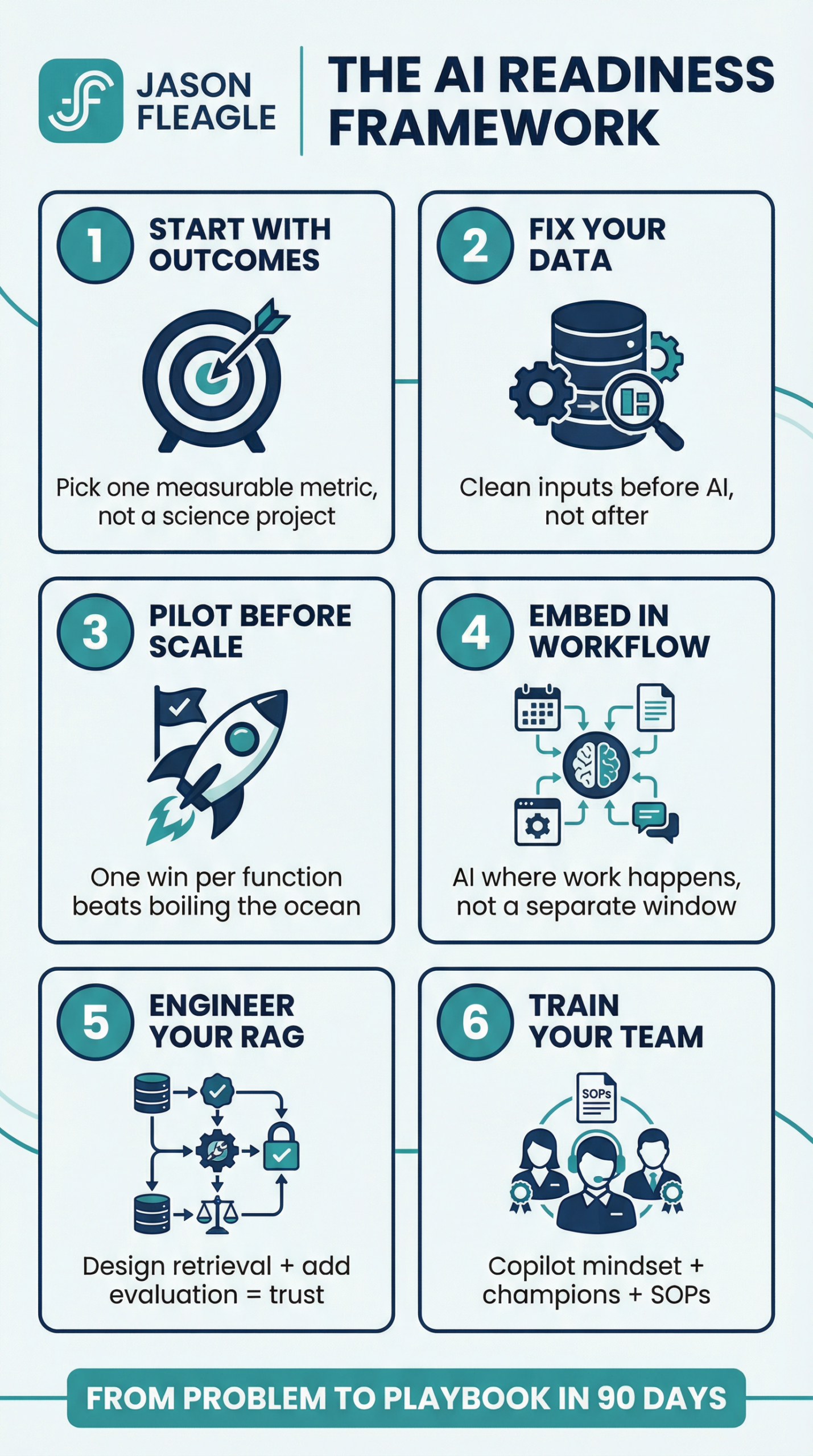
The AI Operating Advantage Framework
A practical path from AI pressure to governed operating value.
Choose the right AI path
One brand system. Multiple executive buying motions.
Designed for executives and operators who need a practical AI decision path: clear business priorities, readiness assessment, governance, workflow design, human review, implementation sequencing, and measurable next steps.AI Readiness Assessment: practical answers for serious AI decisions
AI Readiness Assessment: Direct Answer and FAQ
Direct answer: An AI readiness assessment evaluates whether an organization has the leadership alignment, data quality, governance, security controls, workflows, skills, and operating discipline needed to use AI responsibly and effectively.
What does an AI readiness assessment measure?
It measures business priorities, data and system readiness, policy and governance gaps, security risk, workflow fit, team skills, and implementation capacity.
Who should participate?
Executive sponsors, IT, security, operations, data owners, legal/compliance, and leaders from teams likely to adopt AI.
What should the output be?
The output should be a readiness score, risk map, prioritized use cases, recommended pilots, and a practical next-step plan.