
The proposal is almost finished. Then a requirement changes, an integration still needs testing, and someone has to reconcile the new information with what the team already promised.
That someone is usually the person with the least room on their calendar.
OpenAI’s September 29 announcements speak to that problem from different directions. Dots are persistent agents meant to carry work forward between conversations. GPT-6.1 Sol makes capable model execution cheaper for developers and adds another option in ChatGPT Work and Codex.
For leaders, the useful question is: what responsibility can safely leave your plate, and what evidence would let you trust the result?
Why this matters
- Dots are powered by GPT-6 Astra, with their own cloud computers and access to apps you connect. GPT-6.1 Sol is a separate model release, not the announced engine behind dots.
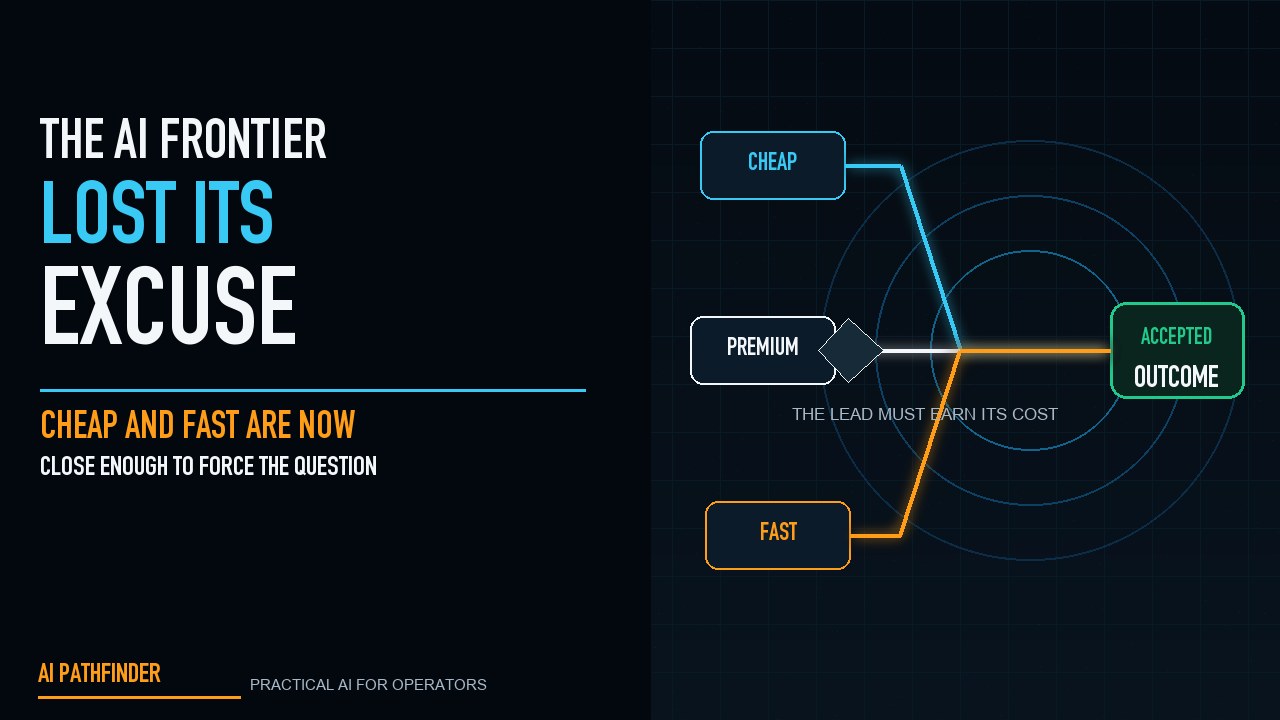
- Sol’s standard API input and output token prices are one-fifth of Astra’s. That creates room to test more workflows, but doesn’t establish a fivefold reduction in the cost of finished work.
- My read: persistent agents and cheaper capable execution make clear delegation more valuable. Teams still need to define a good result and decide who can accept it.
Dots aim to take over the follow-through
In its dots announcement, OpenAI describes agents that keep working toward goals, learn from feedback, and carry context across ChatGPT, Slack, and Teams. Texting is coming later.
Each dot has its own cloud computer and browser. OpenAI says its plugin ecosystem connects to more than 4,000 apps. You can inspect the computer and, if you choose, give the dot permission to connect to your laptop.
The attraction is continuity. Instead of opening another chat and explaining the project again, you could return to work that has moved forward: a revised launch plan, an updated analysis, or tested code ready for review. Those are vendor-described use cases, not results I’ve independently tested.
There is an important boundary around the word “proactive.” OpenAI’s proactive research uses read-only tools. It can gather information from permitted connected sources, but that research cannot directly send messages, change app content, or control a browser or desktop. Follow-up actions face the usual permissions and checks.
That distinction matters when somebody hears “always on” and assumes “authorized to do anything.”
The rollout also has limits. Dots are reaching Pro and Business Premium users in eligible markets; Enterprise, Edu, and Healthcare workspaces can try an admin-enabled beta. The first dot is included in Pro and Business Premium, with an allowance for deeper work. Tasks it starts or manages in Codex or ChatGPT Work still count toward those products’ usage limits.
For companies wanting an agent with its own identity and dedicated responsibility, OpenAI is starting specialist dots in focused enterprise pilots. Its Microsoft Agent 365 integration is being worked on. Neither should be treated as a broadly deployed enterprise capability today.
Sol changes the price of trying
The GPT-6.1 Sol release addresses another constraint: how much capable execution costs when you use it repeatedly.
Its standard API rates per million tokens are $2 for input, $0.10 for cached input, and $10 for output. Developers access it as gpt-6.1-sol. It is also available to Plus, Pro, Business, Enterprise, and Edu users in ChatGPT Work and Codex, but not in Chat at launch.
OpenAI reports that Sol matches Astra on DeepSWE v1.1 at roughly one-fifth of the cost. On AutomationBench, it reports a 4.8-percentage-point improvement over GPT-6 Sol at medium reasoning effort. These are useful reasons to evaluate the model on coding and business workflows, not proof that it will handle your process reliably.
The comparisons come from vendor-reported evaluations with particular tools, effort settings, and task sets. Production workflows can behave differently.
The same caution applies to factuality. OpenAI reports that responses containing a factual error fell from 11.4% to 7.7% versus GPT-6 Sol at low reasoning effort. The test used deliberately difficult conversations where users had flagged an earlier model’s error. It does not establish a general production error rate.
A forthcoming Ultrafast option promises up to eight times faster token generation in Codex. That is a generation-speed claim, not a promise to finish your project eight times faster.
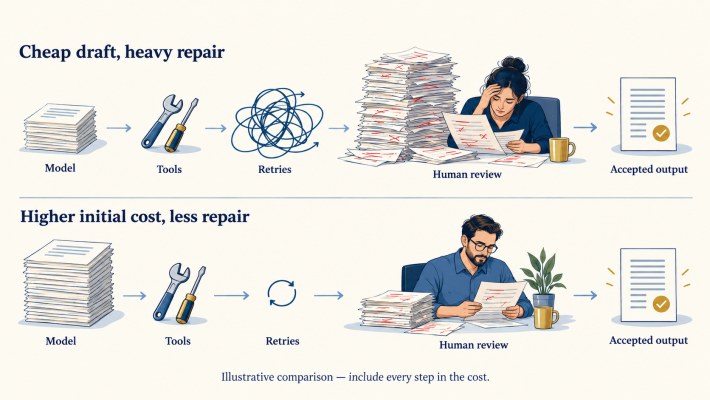
Still, lower model costs can change what is worth attempting. A recurring document check or test run that was hard to justify may deserve another look. Include retries, tool charges, and human review time before calling it a saving.
The handoff is where the value gets decided
These launches suggest a useful operating pattern: a persistent agent follows a responsibility while teams choose suitable models for execution. That is my interpretation, not an announcement that dots offer a user-configurable Sol worker architecture.
Consider a hypothetical proposal workflow, similar to a use case OpenAI describes.
A customer changes a technical requirement. Today, a sales lead may chase the engineer, locate the latest product documentation, update the proposal, and check that the test plan still matches. An agent could prepare that chain of work for review, within its approved access.
Give it a narrower assignment than “keep this deal moving”:
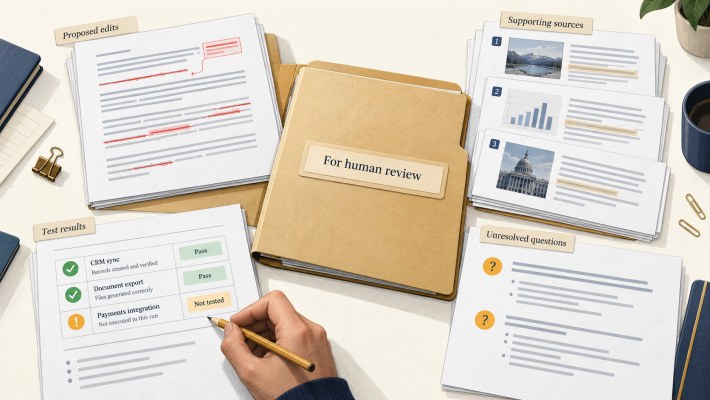
Compare new requirements against the approved proposal. Prepare a separate revision with a change summary, supporting sources, and unresolved questions. Run permitted integration tests in the test environment. Do not change pricing, promise delivery dates, or send anything to the customer.
The expected return is a review package: proposed edits, test results, and explicit gaps. If the integration could not be tested, the package should say so. A confident paragraph is not a substitute for a test result.
The engineer accepts the technical evidence. The commercial owner approves commitments. The agent does the preparation and reconciliation that otherwise consume their attention.
This is where the economics become useful. Measure the cost of an accepted revision, including the review and repair, against the current process. A cheap draft that takes an hour to untangle may be the expensive option.
AI Pathfinder Action Plan
Choose one recurring responsibility for a small pilot. Avoid starting with an entire department.
- Pick work that repeatedly stalls between people. Proposal revisions, release-checklist maintenance, or recurring analysis updates are candidates. Name the person who will accept the result.
- Write the handoff before connecting the tools. Specify the source documents, expected artifact, completion checks, and decisions that stay human. If people disagree about “done,” settle that first.
- Grant only the access that assignment needs. Start with approved sources and a separate draft or test workspace. Keep customer sends and consequential changes behind explicit approval.
- Test the awkward cases. Try conflicting requirements, a missing document, a failed tool, and an instruction hidden inside source material. Check whether the agent reports the problem or quietly fills the gap.
- Compare finished work. Track accepted outputs, elapsed time, human review minutes, rework, and total cost. Expand only when the evidence supports it.
OpenAI’s dots safety explanation describes Custom Rules and a separate Auto-review system that checks planned actions against instructions and safety requirements. Use those controls. They do not eliminate mistakes or replace your team’s review of consequential work.
One practical detail deserves attention: disconnecting an app stops new information sharing through that connection, but information the dot already learned remains in its context. Revoking access and clearing retained context are different jobs.
Frequently Asked Questions
Should we move every workload to Sol?
No. Test it on work you already understand well enough to judge. Keep a stronger model where your evaluations show it earns its cost. OpenAI itself still points to Astra for the most difficult scientific research tasks.
Can a dot approve its own output?
It can perform checks, and Auto-review checks actions. Neither makes it your commercial approver. Set the acceptance rule before the pilot, especially for customer commitments, financial changes, or sensitive information.
Do we need a new AI strategy?
You probably need a clearer assignment first. Use one existing workflow to learn whether persistent execution removes work or merely creates another queue of things to review.
The Bottom Line
Before buying more capacity, ask a team member which recurring task they would most like to stop chasing. Then define the exact package they would need back to approve it confidently.
That gives you a concrete way to evaluate dots, a useful workload for testing Sol, and a better decision than another round of comparing demos.
Follow AI Pathfinder for practical analysis of AI in enterprise work.
About Jason Fleagle
Jason Fleagle is the Head of AI at Netsync, and he writes AI Pathfinder to help people leverage the outcomes of AI the right way. His focus is helping leaders turn AI capabilities into useful work with clear ownership and measurable results.