For years, people have been quietly using ChatGPT as a health companion. They’ve pasted in confusing lab results, prepped for doctor’s appointments, and tried to make sense of complex medical jargon. It was a behavior happening in the shadows, a workaround for a healthcare system that often leaves patients feeling overwhelmed and unheard.
This week, OpenAI brought that behavior into the light.
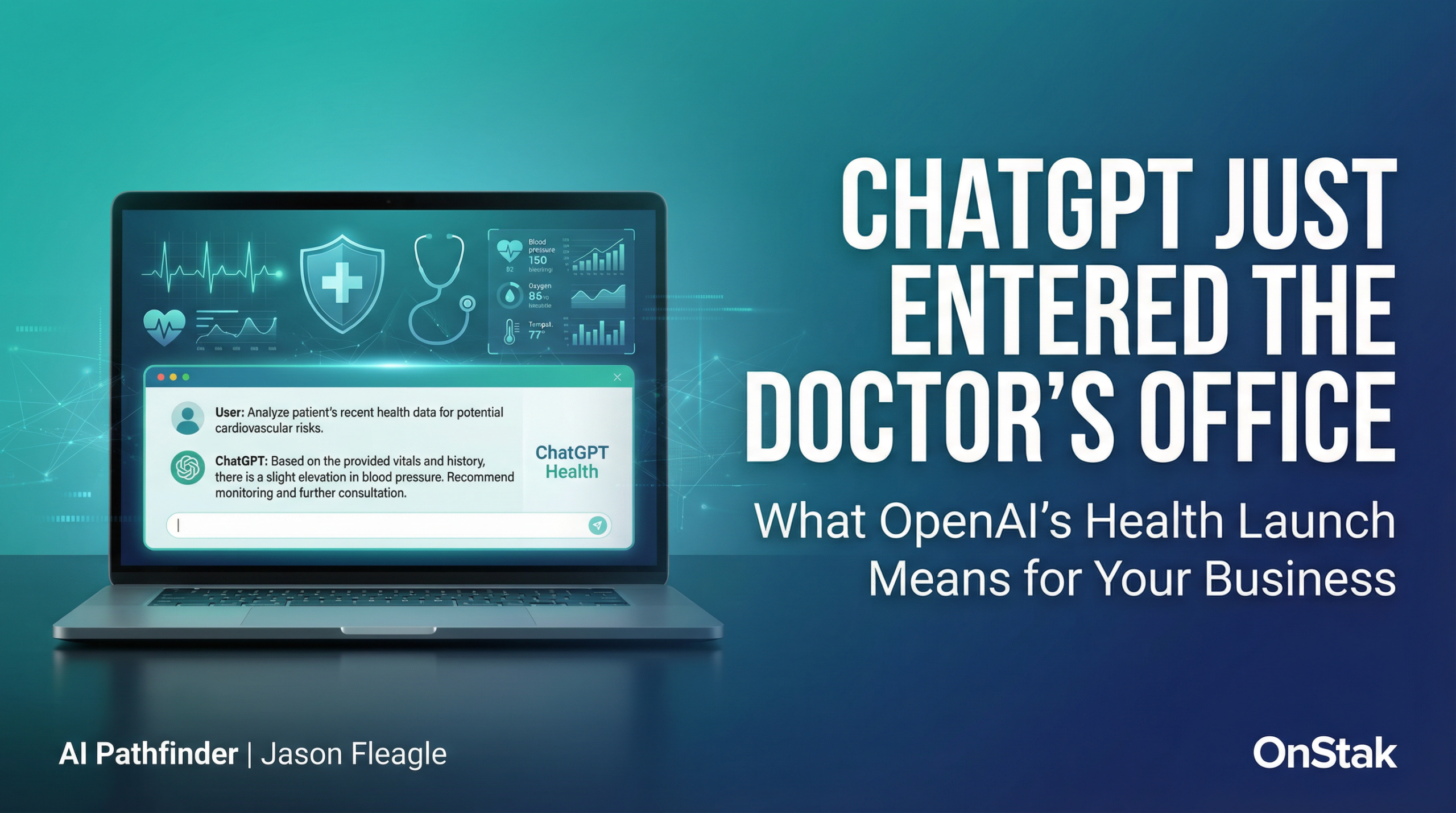
With the launch of ChatGPT Health, the company has created a dedicated, private, and secure space for health conversations. This isn’t just another feature; it’s a deliberate and strategic move into one of the most regulated and high-stakes industries in the world. And it signals a profound shift in how AI will shape the future of healthcare.
Let’s break down what ChatGPT Health is, why it matters, and what it means for enterprise leaders.
What is ChatGPT Health? A Private, Secure Health Companion
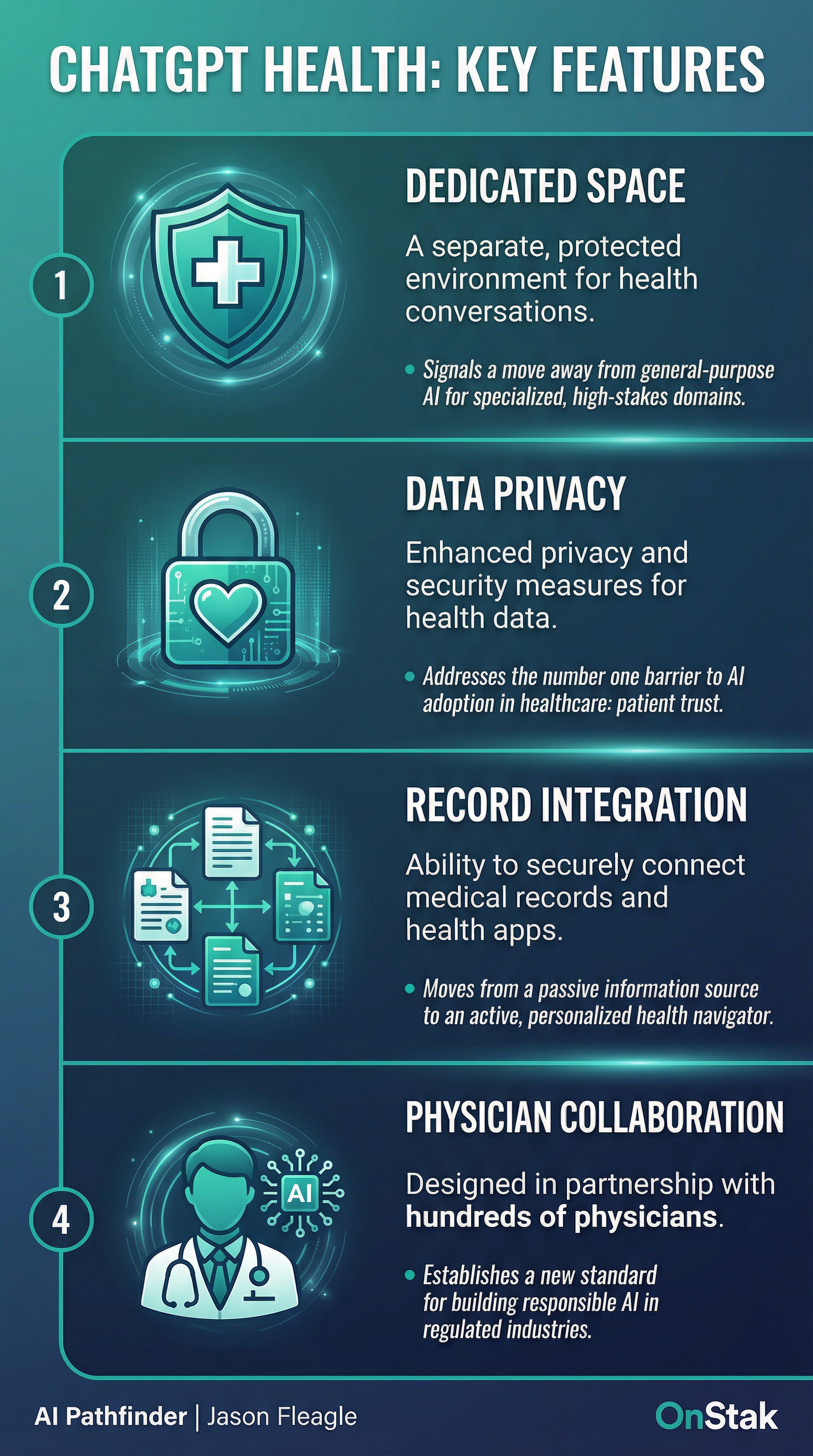
At its core, ChatGPT Health is a protected space within the main ChatGPT application, designed specifically for health-related conversations. OpenAI has built this with enhanced privacy and security, acknowledging the sensitive nature of health data. The experience was designed in close collaboration with hundreds of physicians, a critical step in building trust and ensuring clinical relevance.
Here are the key features that set it apart:
“People already use ChatGPT to understand test results, prepare for appointments, and make sense of what they’re dealing with. ChatGPT Health gives that behavior a dedicated, private home.” – OpenAI Announcement
Why This is a Tipping Point for AI in Healthcare
The launch of ChatGPT Health is significant not just for what it is, but for what it represents. It’s a clear signal that the era of AI as a general-purpose tool is giving way to a future of specialized, domain-specific AI agents.
Here are three reasons why this is a tipping point:
1. It Legitimizes AI as a Patient-Facing Tool: For years, the use of AI in healthcare has been largely confined to back-end processes like medical imaging analysis and administrative automation. ChatGPT Health is one of the first major forays into a direct-to-patient application by a leading AI company. It validates the idea that AI can be a trusted resource for patients navigating their health journey.
2. It Sets a New Standard for Responsible AI Development: OpenAI’s decision to collaborate with hundreds of physicians is a masterclass in responsible innovation. Instead of building in a vacuum, they co-designed the experience with the very people who will be most impacted by it. This approach builds trust, mitigates risk, and ensures that the tool is genuinely helpful, not just technologically impressive.
3. It Bridges the Gap Between Information and Action: By allowing users to connect their medical records, ChatGPT Health moves beyond providing generic health information. It can offer personalized insights based on an individual’s specific health history, bridging the gap between abstract knowledge and actionable advice. This is the holy grail of digital health.
What This Means for Your Business
Even if you’re not in the healthcare industry, the launch of ChatGPT Health offers critical lessons for any enterprise leader navigating the AI landscape.
1. Specialization is the Future: The era of one-size-fits-all AI is ending. The future belongs to specialized agents that are trained on domain-specific data and designed for specific use cases. What is the “ChatGPT Health” equivalent in your industry? What high-stakes, high-value problems can you solve with a specialized AI agent?
2. Trust is Your Most Valuable Asset: In regulated industries, trust is not a soft skill; it’s a hard requirement. OpenAI’s physician collaboration model is a blueprint for how to build trust in a skeptical market. Who are the key stakeholders in your industry that you need to be co-designing with?
3. Privacy is a Product Feature, Not a Legal Hurdle: ChatGPT Health’s emphasis on a separate, protected space demonstrates a deep understanding of user psychology. Privacy isn’t just a line in a legal document; it’s a core part of the user experience. How are you designing your AI products to give users a tangible sense of security and control?
The Bottom Line
The launch of ChatGPT Health is more than just a new product. It’s a glimpse into the future of AI—a future where general-purpose models give way to specialized agents, where trust is built through collaboration, and where AI empowers individuals in the most personal and critical aspects of their lives.
The question for every leader is no longer if AI will transform their industry, but how. And as OpenAI has just demonstrated, the “how” is just as important as the “what.”
About Jason
Jason Fleagle is the Chief AI Architect at OnStak, and is also a writer, entrepreneur, and consultant specializing in tech, AI, and growth. He helps humanize data—so every growth decision an organization makes is rooted in clarity and confidence. Jason has helped lead the development and delivery of over 500 AI projects & tools, and frequently conducts training workshops to help companies understand and adopt AI. With a strong background in digital marketing, content strategy, and technology, he combines technical expertise with business acumen to create scalable solutions. He is also a content creator, producing videos, workshops, and thought leadership on AI, entrepreneurship, and growth. He continues to explore ways to leverage AI for good and improve human-to-human connections while balancing family, business, and creative pursuits.
Looking for AI Growth?
Let’s Talk About Your AI Goals!
What would you do if you could determine the top AI use cases or opportunities for you and your team?
We can help you go from surviving to thriving – with done-for-you business growth implementations.
You can learn more about Jason on his website here.
You can learn more about OnStak here.
You can learn more about our top AI case studies here on our website.
Learn more about my AI resources here on my youtube channel.
And check out my AI online course.