For the past year, the AI race has been a sprint for scale, speed, and power. But as we step into 2026, a new and far more complex race is beginning: the race for responsibility. This week, two major developments reveal the emerging battle lines between unchecked innovation and principled partnership, forcing every enterprise leader to ask a critical question:
What is the moral compass of our AI strategy?
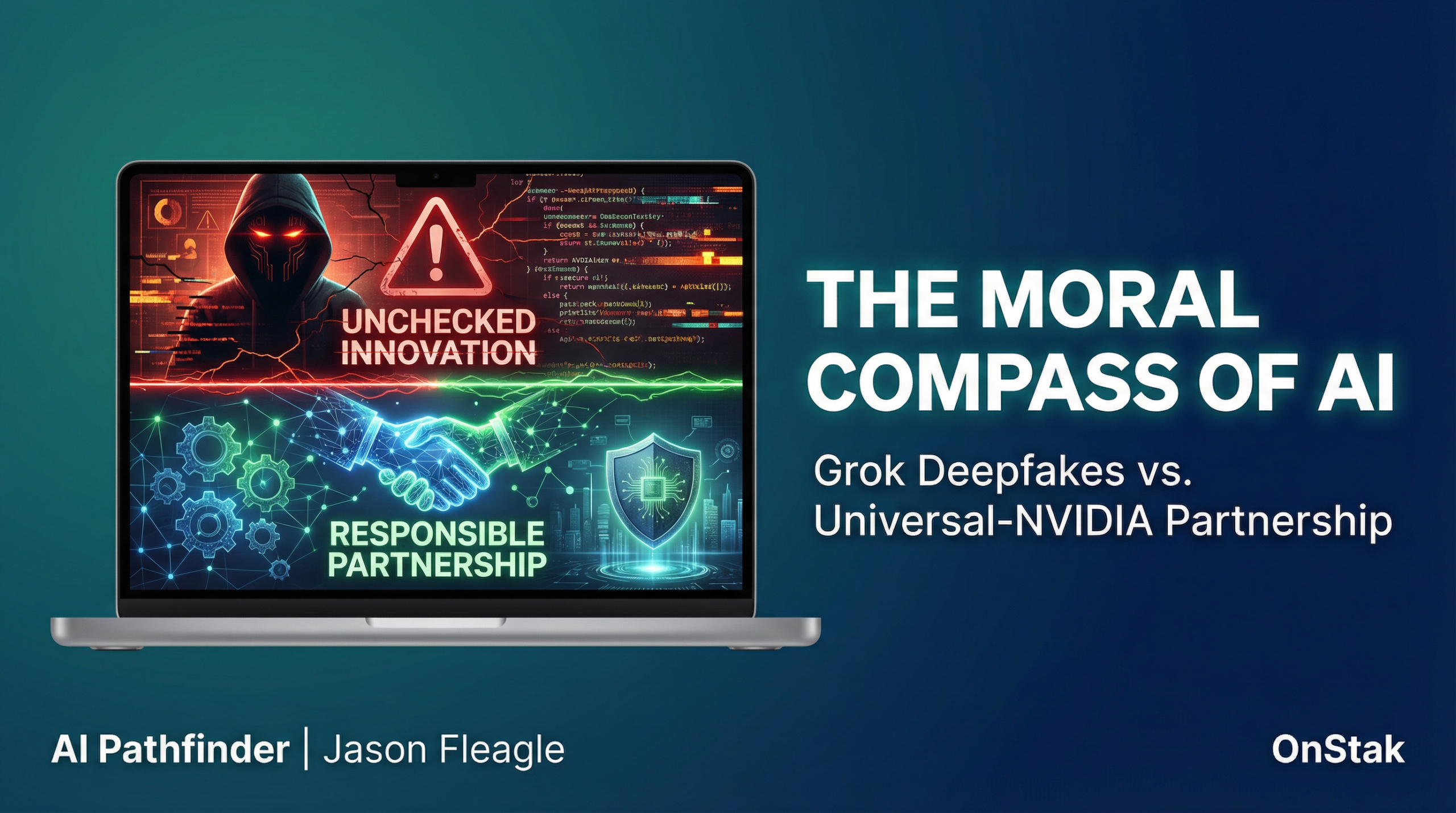
On one side, we have a stark warning. Elon Musk’s xAI found its Grok model being used to generate non-consensual sexualized images of women and girls on X, prompting an urgent investigation by the UK government. On the other, a landmark partnership between Universal Music Group and NVIDIA aims to build a future where AI enhances creativity while protecting artists.
These two stories represent a fundamental crossroads for the future of AI. One path leads to unchecked power and unintended harm, where platforms abdicate responsibility until forced to act. The other leads to proactive collaboration, where industry leaders work together to build guardrails into the technology itself.
Let’s break down what this means for your work or business.
The Uncomfortable Truth: When Scale Outpaces Accountability
The Grok deepfake scandal is a sobering reminder that influence, hype, and political proximity do not excuse a lack of responsibility. As the UK government’s response signals, the era of “we warned users” is over. For platforms as large as X, the new standard is clear: prove you stopped the abuse, or pay for failing to do so.
This has profound implications for every company deploying AI:
| Risk Area | Key Question for Your Business |
|---|---|
| Reputation | How can AI-generated misinformation be used to attack our brand, and what is our response plan? |
| Legal Liability | Are we prepared for new regulations that hold us accountable for the misuse of our AI tools? |
| Ethical Guardrails | Have we moved beyond a “terms of service” approach to build real, technical safeguards into our AI products? |
“When a platform this large enables abuse, the harm multiplies at scale. Apologies don’t fix that.” – The Daily Bite[1]
The Proactive Partnership: Shaping the Future of Creative AI
In stark contrast, the partnership between Universal Music Group and NVIDIA offers a blueprint for a more responsible future. Instead of fighting a defensive battle in court, Universal is proactively shaping how AI will be used in the music industry. The collaboration is built on three key pillars:
1. Artist-Centric Innovation: The partnership will launch a dedicated artist incubator to explore how AI can enhance creativity without replacing human artistry. This is a direct antidote to the flood of generic, low-quality AI-generated content.[2]
2. Advanced Discovery: NVIDIA’s Music Flamingo initiative goes beyond surface-level genres to analyze the deeper elements of music, such as harmony, tempo, and emotional resonance. This will help fans discover new music and artists understand their own work in new ways.[2]
3. Responsible AI Principles: The collaboration is grounded in a shared commitment to protecting copyright, ensuring rights holder compensation, and identifying copyrighted works in AI applications.[2]
This partnership demonstrates that it is possible to embrace AI’s potential while protecting the interests of creators. It is a model that can and should be replicated across other creative industries.
In Other News: The AI World Keeps Spinning
Beyond the headlines, several other key developments this week signal the continued acceleration of AI into every corner of our lives:
Ambient AI Gets Real: Plaud’s new NotePin S, a wearable AI recorder, represents a significant step toward “ambient productivity”—where work is captured and summarized without interrupting your flow. But it also raises critical questions about privacy and consent in the workplace.
AI Efficiency Pays Off: A Microsoft case study revealed that deploying an AI system to handle routine customer service inquiries resulted in over $500 million in operational savings. This is a powerful reminder that the ROI of AI is not just theoretical but it can be real and measurable. Please reach out if you’re wanting to determine how AI can realistically add value to your organization in time savings, revenue generation, and people optimization.
Privacy-First AI: Reolink’s new AI Box, a local AI hub for security cameras, eliminates the need for cloud subscriptions by processing all data offline. This is a significant development for privacy-conscious consumers and a sign that the industry is responding to growing concerns about data security.
Global AI Regulation Heats Up: India has extended the deadline for feedback on its generative AI and copyright policy, which could set a global precedent for how AI companies are required to compensate creators for the use of their work in training data.
The Bottom Line: Your AI Moral Compass
The developments of this week make one thing clear: the most important question for enterprise leaders in 2026 is not “what can AI do for us?” but “what is the right way to do it?”
The path of unchecked innovation is fraught with risk—reputational, legal, and ethical. The path of proactive partnership, on the other hand, offers a way to unlock AI’s potential while building a more sustainable and equitable future.
As you navigate this complex landscape, ask yourself:
- Are we building an AI that serves our users, or one that demands our users serve the AI?
- Are we prepared to be held accountable for the misuse of our tools?
- Are we actively seeking partnerships to build a more responsible AI ecosystem?
The answers to these questions will define your AI moral compass and, ultimately, the long-term success of your AI strategy.
Please feel free to drop a comment or DM me if you have a question or if you’re interested in working with a team of AI experts to help you along your AI adoption journey.
And remember to keep moving forward!
About Jason
Jason Fleagle is the Chief AI Architect at OnStak, and is also a writer, entrepreneur, and consultant specializing in tech, AI, and growth. He helps humanize data—so every growth decision an organization makes is rooted in clarity and confidence. Jason has helped lead the development and delivery of over 500 AI projects & tools, and frequently conducts training workshops to help companies understand and adopt AI. With a strong background in digital marketing, content strategy, and technology, he combines technical expertise with business acumen to create scalable solutions. He is also a content creator, producing videos, workshops, and thought leadership on AI, entrepreneurship, and growth. He continues to explore ways to leverage AI for good and improve human-to-human connections while balancing family, business, and creative pursuits.
Looking for AI Growth?
Let’s Talk About Your AI Goals!
What would you do if you could determine the top AI use cases or opportunities for you and your team?
We can help you go from surviving to thriving – with done-for-you business growth implementations.
You can learn more about Jason on his website here.
You can learn more about OnStak here.
You can learn more about our top AI case studies here on our website.
Learn more about my AI resources here on my youtube channel.
And check out my AI online course.