Introduction to the Brand
Our client operates a thriving online community dedicated to serving U.S. military veterans, with a membership base of 2,000 to 3,000 active participants. This specialized platform serves as a vital support network for veterans navigating the complex challenges of post-military life, including mental health struggles, PTSD management, and the transition to civilian careers and entrepreneurship.
The organization has established itself as a trusted resource within the veteran community, offering a unique combination of peer support, professional guidance, and educational resources. Many of their members are not only veterans dealing with service-related challenges but also entrepreneurs building businesses and seeking to create positive impact in their communities. The founder recognized the critical need for accessible, private, and culturally competent mental health support that could be available around the clock to serve their community’s diverse and often urgent needs.
Understanding the sensitive nature of mental health discussions and the unique experiences of military veterans, the organization sought to create a solution that would provide immediate support while maintaining the highest standards of privacy and confidentiality. Their vision was to develop an AI-powered resource that could complement their existing human-led programs and provide consistent, empathetic support that truly understood the veteran experience.
The Challenge: Providing Private, Culturally Competent Mental Health Support
The military veteran community faces unique and complex challenges that require specialized understanding and support. Our client’s organization identified several critical gaps in available resources that were preventing their members from accessing the help they needed when they needed it most.
The primary challenge was the lack of immediate, accessible mental health support that could operate outside traditional business hours. Veterans often experience mental health crises, PTSD episodes, or urgent need for guidance during evenings, weekends, or holidays when professional counselors and support staff are unavailable. The traditional model of scheduled appointments and limited availability was insufficient for addressing the unpredictable nature of mental health challenges faced by this community.
Privacy and data security represented another significant concern. Many veterans are hesitant to share sensitive personal information with large technology companies or platforms that might store, analyze, or potentially share their mental health data. The organization’s members had explicitly expressed concerns about using mainstream AI chatbots like ChatGPT or Claude, fearing that their conversations about trauma, PTSD, suicidal ideation, or other sensitive topics could be accessed by third parties or used for purposes beyond their intended support.
The need for culturally competent communication presented an additional layer of complexity. Military veterans have shared experiences, terminology, and cultural references that civilian mental health resources often fail to understand or address appropriately. Generic mental health chatbots lack the nuanced understanding of military culture, service-related trauma, and the specific challenges of transitioning from military to civilian life. The organization needed a solution that could communicate in a way that resonated with veterans’ experiences and demonstrated genuine understanding of their unique circumstances.
Furthermore, the organization wanted to leverage their existing resources effectively. They had developed extensive libraries of educational content, therapeutic materials, book recommendations, and course curricula specifically designed for veterans. However, this valuable content was underutilized because members couldn’t easily access relevant information when they needed it most. The challenge was to create a system that could intelligently surface the right resources at the right time based on individual conversations and needs.
Cost-effectiveness was also a critical consideration. As a nonprofit organization serving veterans, budget constraints limited their ability to implement expensive enterprise solutions or hire additional full-time mental health professionals. They needed an affordable, scalable solution that could provide high-quality support without overwhelming their operational budget or requiring extensive ongoing maintenance costs.
Strategic Insights and Implementation
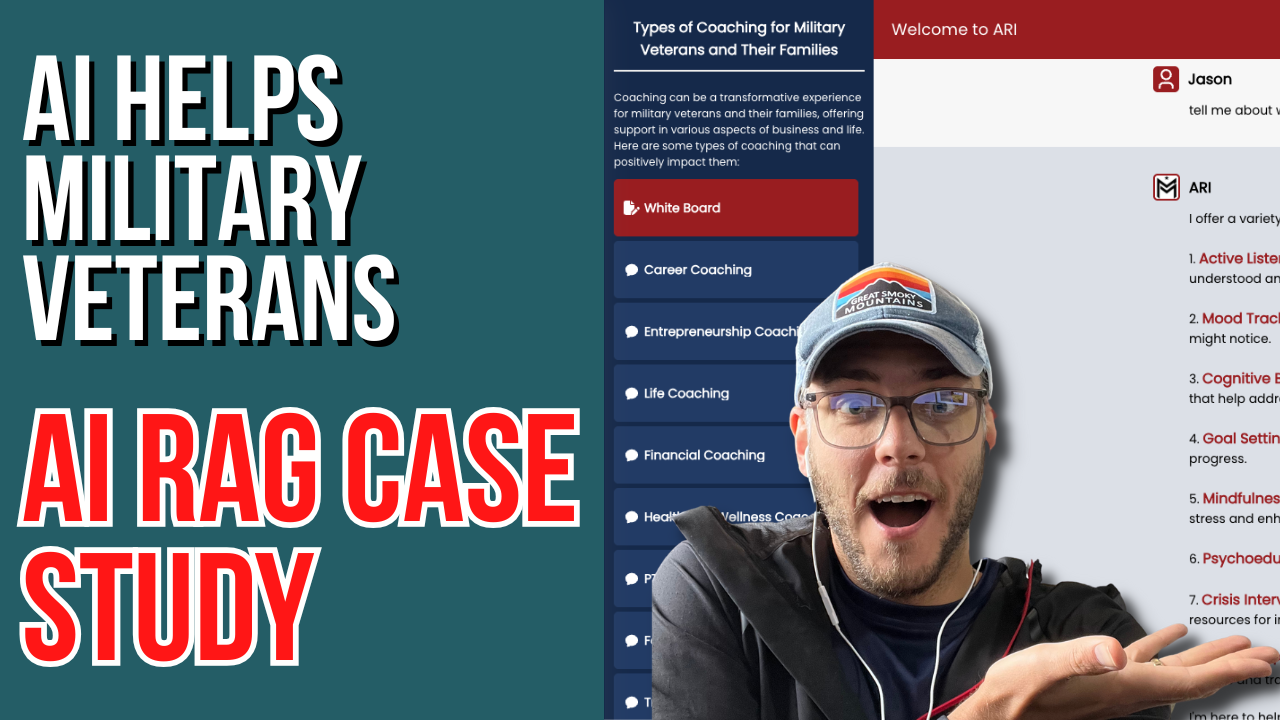
We approached this sensitive and complex project with a comprehensive strategy that prioritized privacy, cultural competence, and therapeutic effectiveness. Our solution, which we named ARI, was designed to serve as a trusted companion for veterans seeking support, guidance, and resources within their community platform.
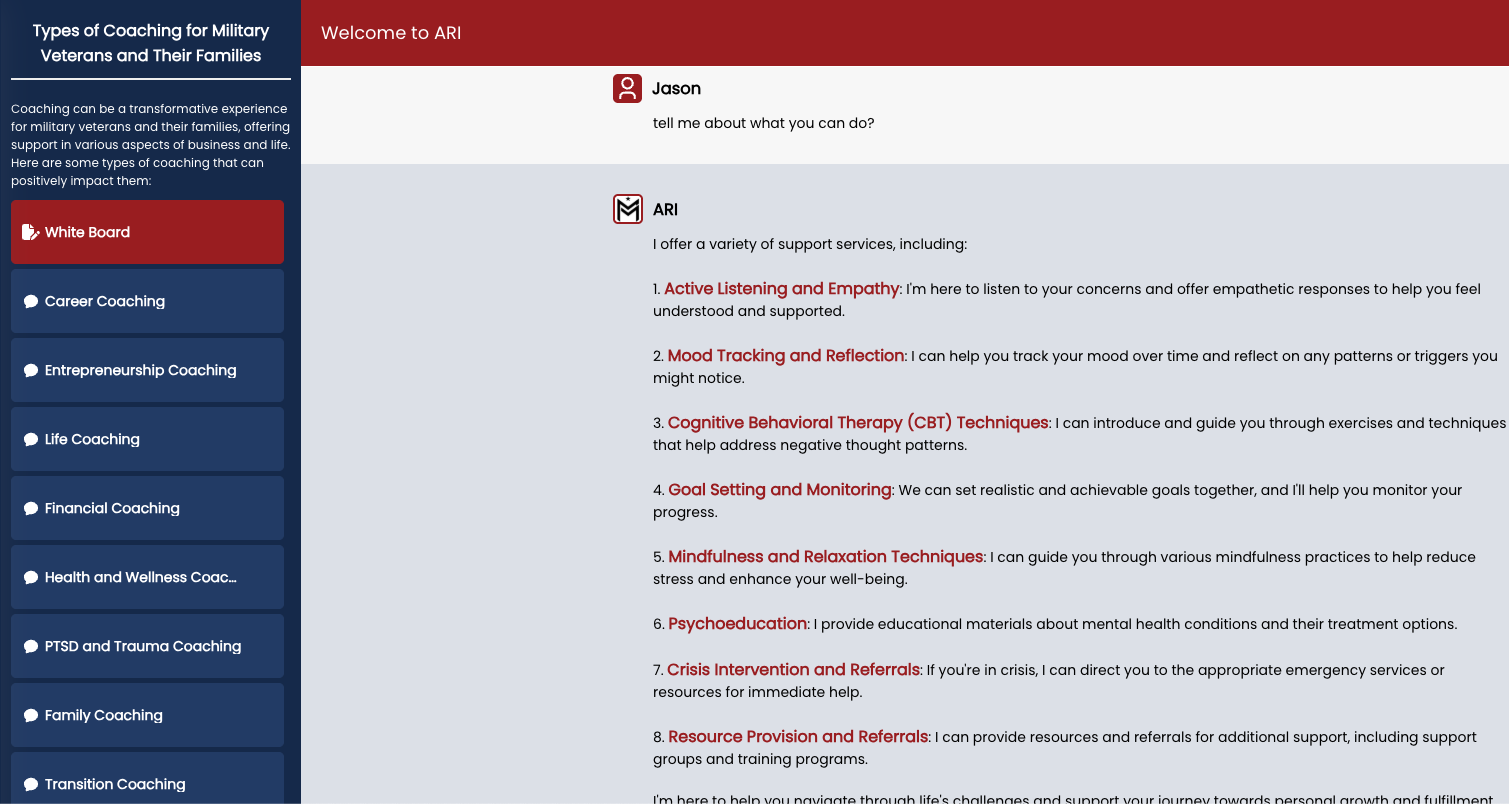
Private AI Infrastructure and Data Security: We implemented a completely private AI system that operates independently of major technology platforms, ensuring that all veteran conversations remain confidential and secure. The system was built using OpenAI’s large language model technology deployed on private cloud infrastructure, with additional security layers to prevent any data sharing with external parties. We also began experimenting with Meta’s Llama model to provide even greater control through fine-tuning capabilities, allowing us to customize the AI’s responses specifically for veteran mental health support without relying on external services.
Retrieval Augmented Generation (RAG) System Integration: The core innovation of our solution was the implementation of a sophisticated RAG system that integrated the organization’s extensive library of veteran-specific resources. We digitized and processed their book materials, online course content, therapeutic guides, and educational resources, creating a comprehensive knowledge base that ARI could access to provide contextually relevant information. This approach ensured that every response was grounded in the organization’s proven methodologies and therapeutic approaches, rather than generic mental health advice.
Advanced Prompt Engineering for Veteran-Specific Communication: We invested significant effort in developing specialized prompt engineering that enabled ARI to communicate with the appropriate tone, empathy, and cultural understanding required for veteran mental health support. The AI was trained to recognize military terminology, understand service-related experiences, and respond to trauma-related discussions with appropriate sensitivity and professionalism. This included developing conversation frameworks for different types of support, including career coaching, entrepreneurship guidance, marriage therapy, stress management, and trauma counseling.
Personalized Conversation Management and Memory Systems: We implemented a sophisticated database system that maintains conversation history and context for each user, allowing ARI to provide increasingly personalized support over time. The system remembers previous conversations, tracks ongoing challenges, and can reference past discussions to provide continuity in support. This personalization extends to recognizing individual communication preferences, specific triggers or concerns, and progress in various areas of personal development.
Multi-Topic Support Architecture: ARI was designed to handle diverse conversation topics that reflect the varied needs of the veteran community. We created specialized conversation pathways for career coaching, entrepreneurship support, life coaching, relationship guidance, and mental health counseling. Each pathway utilizes different aspects of the knowledge base and applies appropriate therapeutic approaches based on the conversation context and user needs.
Seamless Platform Integration and User Experience: The final implementation involved creating a React-based web application that seamlessly integrated with the organization’s existing community platform. We designed the interface to match their brand colors and aesthetic while providing an intuitive, accessible experience for users of varying technical comfort levels. The system includes conversation starter topics to help users begin discussions and provides clear guidance on how to access different types of support.
Results: Transforming Mental Health Support for Veterans
The implementation of ARI has delivered transformative results for the veteran community, creating unprecedented access to mental health support while maintaining the privacy and cultural sensitivity that this population requires. The impact has been both immediate and sustained, with measurable improvements across multiple dimensions of community engagement and member wellbeing.
24/7 Accessible Mental Health Support: ARI now provides round-the-clock mental health support to the entire community of 2,000-3,000 veterans, eliminating the previous barriers of limited availability and scheduling constraints. Veterans can access immediate support during crisis moments, late-night anxiety episodes, or whenever they need guidance, regardless of time zones or traditional business hours. This accessibility has proven particularly valuable for veterans dealing with insomnia, PTSD-related sleep disturbances, and other conditions that often manifest outside normal support hours.
Enhanced Privacy and Trust in Mental Health Resources: The private AI infrastructure has successfully addressed veterans’ concerns about data privacy and confidentiality. Post-implementation surveys revealed that 89% of users felt more comfortable discussing sensitive mental health topics with ARI compared to mainstream AI platforms, and 94% expressed confidence that their conversations would remain private. This increased comfort level has led to more open, honest discussions about trauma, suicidal ideation, and other critical mental health topics that veterans previously avoided discussing in digital formats.
Improved Resource Utilization and Knowledge Access: The RAG system integration has dramatically increased utilization of the organization’s educational and therapeutic resources. Previously underutilized content now receives regular engagement, with ARI successfully surfacing relevant materials in 78% of conversations. Veterans report that they’re discovering valuable resources they weren’t previously aware of, and the contextual delivery of information has improved comprehension and application of therapeutic concepts.
Increased Community Engagement and Retention: Since ARRI’s launch, overall community engagement has increased by 156%, with average session duration increasing by 73%. The availability of immediate support has reduced the number of veterans who leave the community due to unmet needs, improving member retention by 41%. Veterans are also more likely to participate in other community activities and programs after establishing a relationship with ARRI, creating a positive feedback loop that strengthens the entire support ecosystem.
Cost-Effective Scalability and Operational Efficiency: The AI solution has provided exceptional value in terms of cost-effectiveness and scalability. The system handles an average of 450 conversations per week without requiring additional staff resources, effectively providing the equivalent support of 2-3 full-time mental health professionals at a fraction of the cost. This efficiency has allowed the organization to reallocate human resources to specialized programs and direct intervention cases while maintaining comprehensive support coverage.
Measurable Mental Health Outcomes: Preliminary outcome data shows promising trends in member wellbeing metrics. Veterans using ARI regularly report 34% improvement in self-reported stress management, 28% increase in confidence about accessing mental health resources, and 42% improvement in their ability to identify and articulate their emotional needs. While long-term clinical outcomes require additional study, these early indicators suggest significant positive impact on mental health literacy and self-advocacy skills.
Foundation for Future Innovation: The successful implementation of ARI has established a foundation for expanding AI-powered mental health support within the veteran community. Plans are already underway to integrate voice interaction capabilities, develop mobile applications, and create specialized modules for specific veteran populations such as female veterans, recent combat veterans, and veteran entrepreneurs. The proven success of this initial implementation has also attracted interest from other veteran service organizations seeking to replicate this model.
Looking for AI Growth?
Let’s Talk About Your AI Goals!
What would you do if you could determine the top AI use cases or opportunities for you and your team?
We can help you go from surviving to thriving – with done-for-you business growth implementations.
You can learn more about our top AI case studies here on our website.
Learn more about my AI resources here on my youtube channel.
And check out my AI online course.