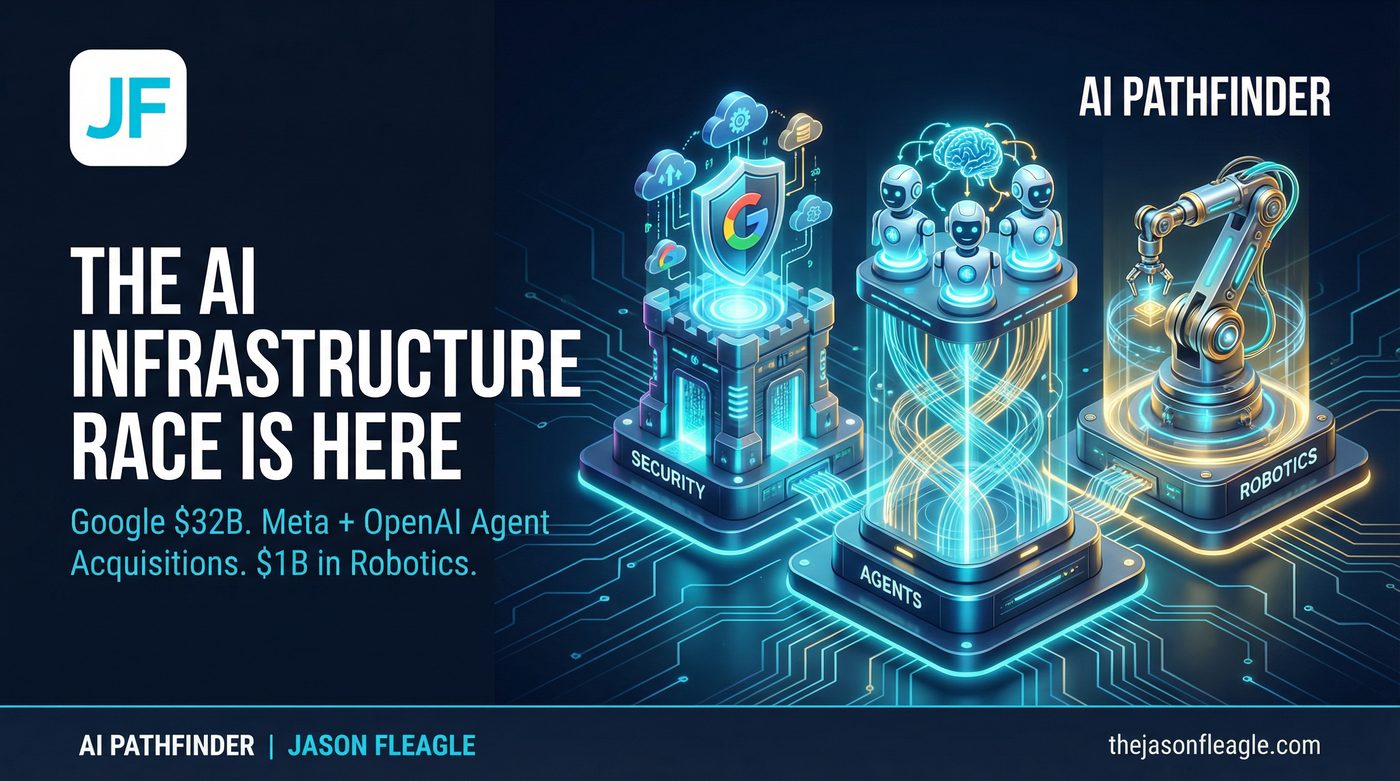
TLDR: In one week, Google spent $32B on a security company, OpenAI and Meta bought the startups building the social network for AI agents, and VCs poured nearly $1B into AI-powered robots. The message is clear: the era of AI experimentation is over. The race to build and own the foundational infrastructure of the AI economy has begun.
What Happened
This wasn’t a normal week in AI. This was a week of foundational moves by the giants, signaling a hard pivot from building novel models to acquiring the core infrastructure needed to deploy them securely and at scale.
Three major signals landed simultaneously:
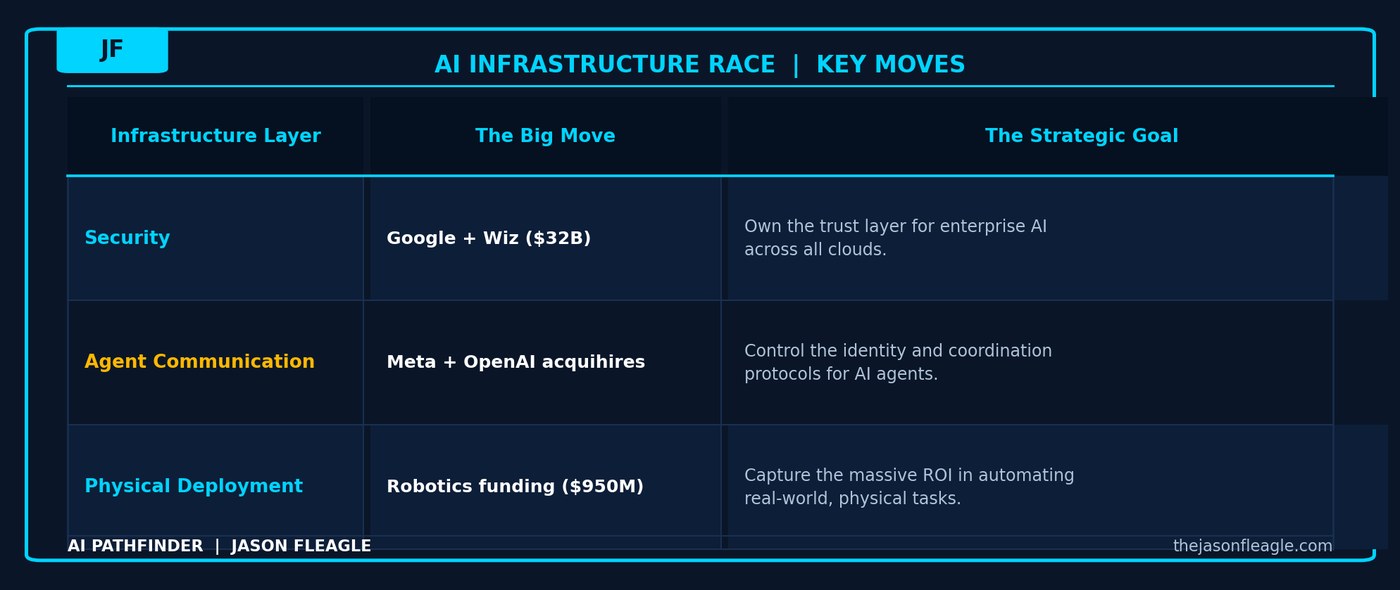
1. The Security Layer: Google Buys Wiz for $32B. In its largest acquisition ever, Google bought the cloud and AI security platform Wiz. The move is a direct shot at owning the security layer for multicloud and hybrid AI environments. Google isn’t just buying a product; it’s buying the trust of the enterprise, aiming to become the one-stop security provider for companies running AI workloads across AWS, Azure, and their own data centers.
2. The Agent Layer: Meta & OpenAI Acquire the “Social Network for Bots”. In a bizarre series of acquihires, Meta bought Moltbook (a Reddit-like platform for AI agents) just weeks after OpenAI hired the creator of OpenClaw, the open-source tool Moltbook was built on. This isn’t about a quirky social network; it’s about owning the primitives for agent-to-agent communication. The race is on to build the directory and identity layer for the coming AI workforce.
3. The Physical Layer: Robotics Raises Nearly $1B. While the software giants fought over the cloud, VCs made a hard pivot to the physical world. Two industrial robotics companies, Rhoda AI and Mind Robotics, raised a combined ~$950M to build AI-powered robots for complex manufacturing tasks. The signal: smart money sees the next wave of ROI coming from automating physical labor on factory floors, not just digital tasks on screens.
Why It Matters (The Board-Level View)
These moves are the tectonic plates of the new economy shifting into place. For the past two years, the AI race has been about model performance. That race is largely over for most enterprises with the models being “good enough” for the majority of tasks. The new race is becoming more about deployment, security, and control.
Is this the end of the beginning? The foundational infrastructure for the AI economy is being built and acquired right now. Companies that are still just running chatbot pilots are about to be left permanently behind, building their business on land they don’t own. So what should you do right now?
Strategic Imperatives for Leaders
1. Re-evaluate Your Cloud & Security Strategy — Now.
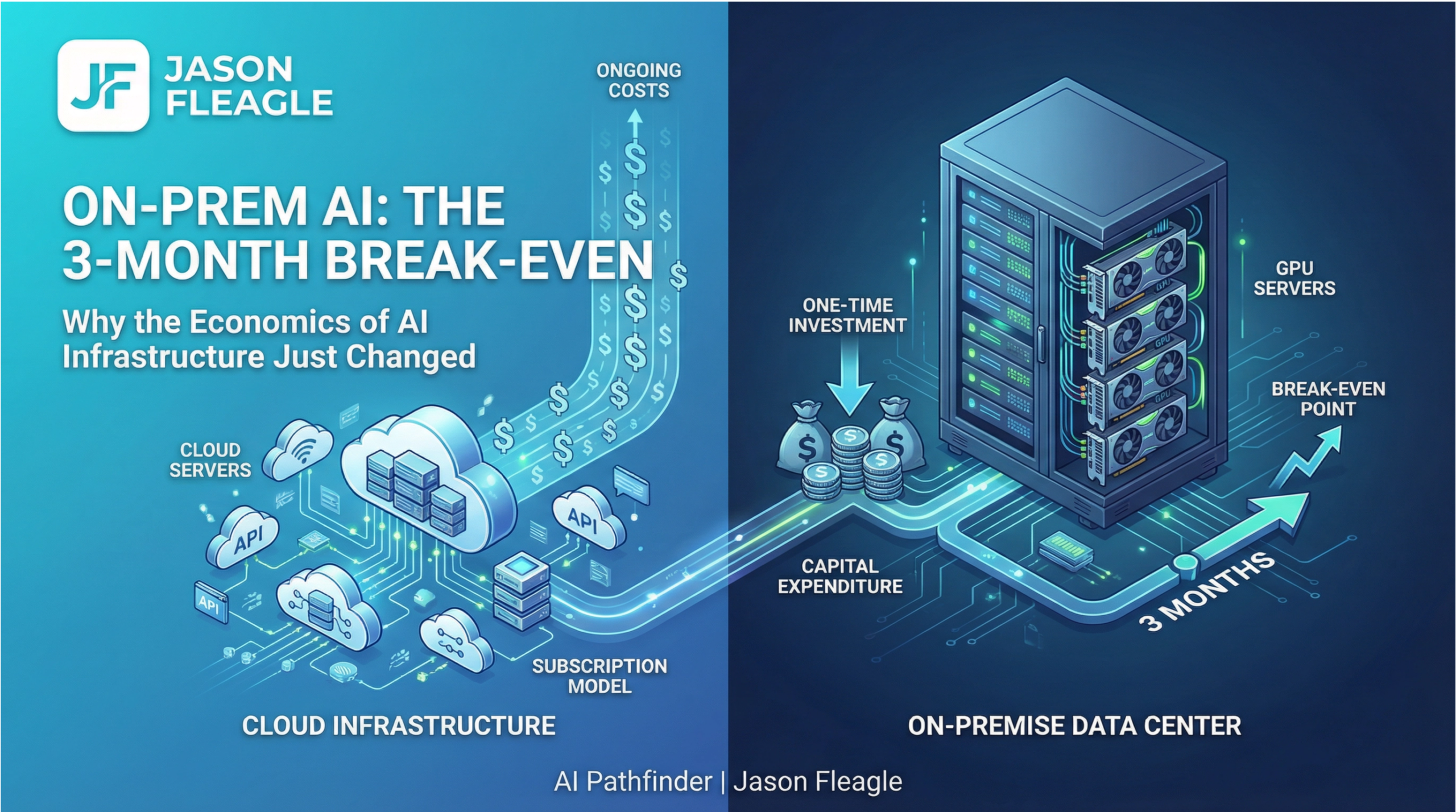
With Google’s move, the lines between cloud provider and security provider are blurring. If you’re a multicloud enterprise, you need to ask: who do we trust to secure our AI workloads? This isn’t just an IT decision; it’s a board-level risk conversation. The fact that 93% of enterprises are already repatriating AI workloads from the public cloud due to security and cost concerns shows this is a live issue. Are you exploring a hybrid approach of on-prem & cloud?
2. Start Building Your “Agent Enablement” Team.
Forget “AI task forces.” You need a dedicated team responsible for building the internal infrastructure your AI agents will use to operate. This team’s job isn’t to build models but to build the secure APIs, data access policies, and monitoring tools that allow agents to do meaningful work without burning the company down. OpenAI’s acquisition of Promptfoo, a tool for red-teaming agents, confirms this is now becoming even more of a critical function.
3. Look for Your “Physical AI” Opportunity.
If your business involves atoms, not just bits, the robotics funding boom is your signal. Where is the most repetitive, high-cost physical labor in your operations? The technology to automate these tasks is maturing at an incredible pace. The ROI here isn’t in saved minutes, but in massive margin improvement and operational scale.
The Bottom Line
The AI infrastructure race isn’t a spectator sport. The moves being made today will determine the competitive landscape for the next decade. Leaders must stop asking “What can AI do?” and start asking “What foundational infrastructure do we need to build to win?”
What are your thoughts on how the AI infrastructure war is shaping up? Let me know in the comments, and if you found value in this article please repost. Thanks!
Ready to Build Your AI Strategy?
- Work with me on AI consulting → https://scalingmillions.com/ai-consultant
- See more case studies → https://thejasonfleagle.com/category/case-studies/
- Subscribe to my YouTube channel → https://youtube.com/@jjfleagle
- Learn AI marketing fundamentals → https://theaimarketingcourse.com/
About Jason Fleagle
Jason Fleagle is an AI architect and Chief AI Officer who helps enterprise organizations turn data into growth. He’s delivered over $70M in revenue impact through AI-powered marketing, automation, advertising, and strategic consulting. His work focuses on practical, ROI-driven AI implementations that deliver measurable results in time savings, cost reduction, and workforce transformation.