When One-Third of the Internet Goes Dark: The AWS Outage and the Single-Cloud Trap
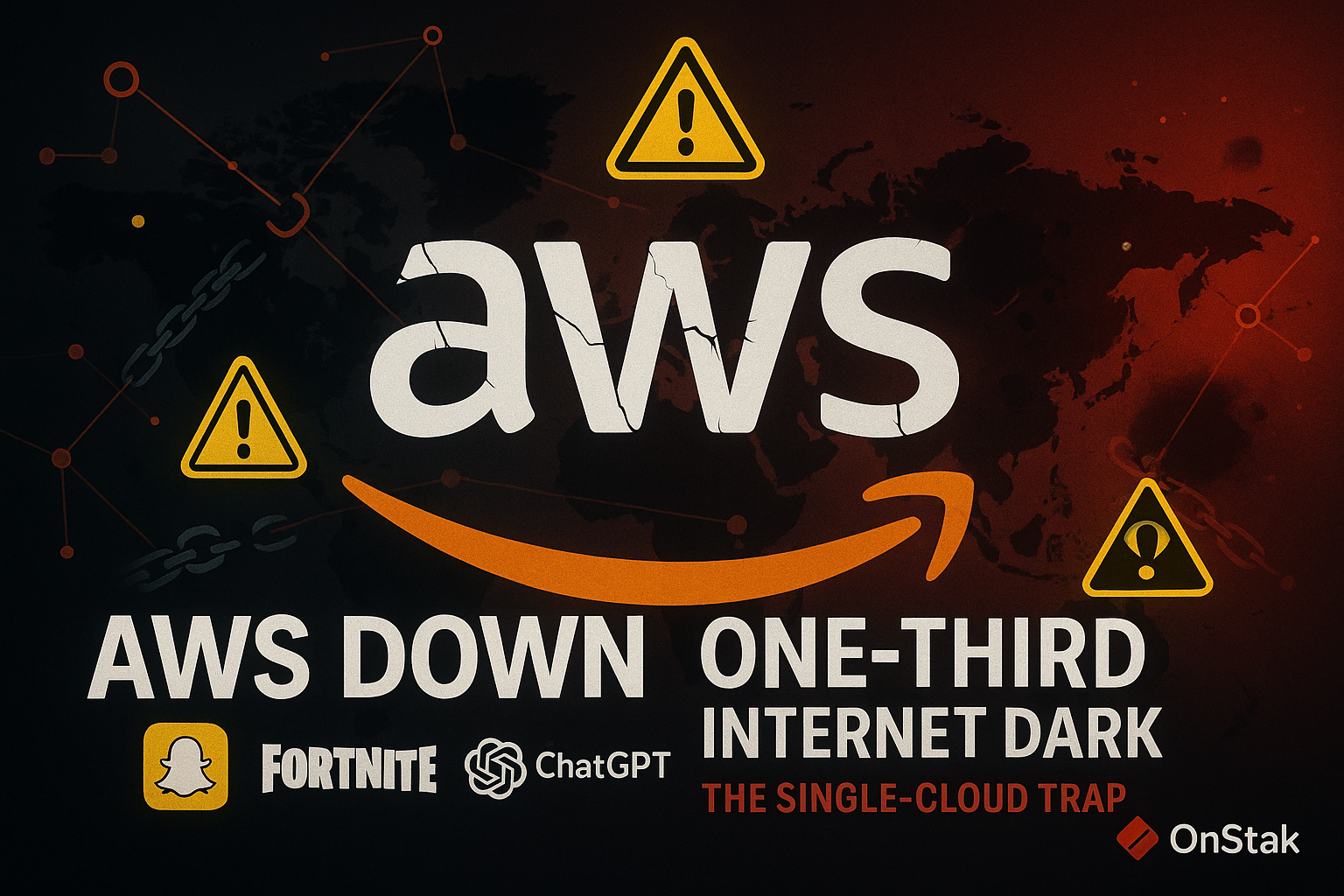
TLDR: A 15-hour AWS outage in the critical US-EAST-1 region took down a huge swath of the internet, from Snapchat and Fortnite to ChatGPT and the McDonald’s app. The root cause was a mundane DNS failure, but the impact was a stark reminder of a systemic risk haunting the digital economy: our overwhelming reliance on a single cloud provider. For businesses, this is a wake-up call. The “we already have AWS” complacency is a dangerous trap, and a multi-cloud or hybrid-cloud strategy is no longer a luxury—it’s a necessity for survival.
On Monday, millions of people woke up to a broken internet. Alexa couldn’t set alarms, Ring cameras had recording gaps, and major platforms from Snapchat to ChatGPT were offline. The culprit? A massive, 15-hour outage at Amazon Web Services (AWS), the invisible infrastructure that powers roughly one-third of the internet. The cause was a familiar villain in the tech world—a DNS failure—but the widespread chaos it caused has once again exposed the fragile foundation upon which much of the digital world is built.
This wasn’t a freak accident. The affected US-EAST-1 region in Northern Virginia, AWS’s oldest and largest data center, has been the epicenter of major outages in 2017, 2020, 2021, and 2023. The pattern is clear: relying on a single cloud provider, especially a single region within that provider, is not a question of if you will go down, but when.
For business leaders, the key takeaway from this latest incident is not the technical minutiae of DNS. It’s the strategic imperative to escape the single-cloud trap.
The Illusion of Infinite Reliability
The cloud has been sold on a promise of near-infinite scale and reliability. Companies have flocked to AWS, Azure, and Google Cloud, offloading their infrastructure management in exchange for what they believed was a more resilient and cost-effective solution. For the most part, this has been true. But as the saying goes, “It works until it doesn’t.”
Monday’s outage is a textbook illustration of the risks of putting all your eggs in one basket. When AWS sneezes, a huge portion of the internet catches a cold. And when your business is built entirely on that single provider, a 15-hour outage can be catastrophic, leading to lost revenue, reputational damage, and a complete halt in operations.
The “We Already Have AWS” Complacency
One of the biggest hurdles to building a more resilient digital infrastructure is complacency. A UK government official, when asked about building a domestic cloud alternative, famously quipped, “But what’s the point? We already have AWS, over there.” This attitude is pervasive in the private sector as well. AWS is so dominant, so entrenched, that many businesses simply accept the risk of single-provider dependence as a cost of doing business.
This is a dangerous and short-sighted view. The recurring outages in US-EAST-1 prove that even the biggest and best cloud providers are not infallible. The operational and reputational costs of a major outage far outweigh the perceived complexities of a multi-cloud or hybrid-cloud strategy.
Multi-Cloud is No Longer Optional
For years, multi-cloud has been seen as a complex and expensive strategy reserved for the largest enterprises. But as the risks of single-cloud dependence become more apparent, the calculus is changing. For any business with mission-critical operations, a multi-cloud or hybrid-cloud strategy is no longer a “nice to have”; it’s a fundamental requirement for resilience.
This doesn’t mean you have to abandon your primary cloud provider. It means you need to build in redundancy. This can take many forms:
Geographic Redundancy: Distribute your workloads across multiple regions within your primary cloud provider. If US-EAST-1 goes down, you can failover to US-WEST-2.
Provider Redundancy: For the highest level of resilience, distribute your critical workloads across multiple cloud providers. If AWS has an outage, you can failover to Azure or Google Cloud.
Hybrid Cloud: Combine public cloud services with private cloud or on-premises infrastructure to create a more resilient and flexible environment.
Yes, these strategies add complexity and cost. But what is the cost of a 15-hour outage to your business? For most, the investment in resilience is a small price to pay for business continuity.
The Geopolitical Dimension
Beyond the operational risks, the concentration of cloud infrastructure in the hands of three American giants creates a geopolitical vulnerability. As the BBC’s Zoe Kleinman noted, the UK and Europe are heavily reliant on US cloud providers. This raises important questions about data sovereignty, regulatory compliance, and what would happen in the event of a major geopolitical rift.
This is the same logic that is driving the reshoring of semiconductor manufacturing. Just as countries are realizing they can’t be dependent on a single region for critical hardware, businesses need to realize they can’t be dependent on a single company for critical infrastructure.
What This Means for Your Business
1. Audit Your Dependencies: Do you know where your critical workloads are running? Are you reliant on a single region or a single provider? The first step is to understand your exposure.
2. Quantify the Risk: What would a 15-hour outage cost your business in lost revenue, productivity, and reputational damage? Putting a number to the risk will help you justify the investment in resilience.
3. Develop a Multi-Cloud or Hybrid-Cloud Strategy: Don’t wait for the next major outage. Start planning now for how you will build a more resilient and flexible infrastructure. This is not just an IT issue; it’s a core business strategy issue.
4. Test Your Failover Plan: A plan that hasn’t been tested is not a plan; it’s a theory. Regularly test your failover and recovery procedures to ensure they work when you need them most.
The AWS outage is a wake-up call. The era of blind faith in a single cloud provider is over. The future belongs to businesses that are proactive, resilient, and strategic in how they manage their digital infrastructure.
At OnStak, we specialize in helping businesses design and implement resilient, multi-cloud, and hybrid-cloud strategies. We understand that every business is different, and we work with you to build a solution that meets your unique needs for performance, cost, and resilience. The internet will go down again. The question is, will your business go down with it? Let’s build a more resilient future, together.